Kandovan, an interesting and mysterious village hidden in the northwest of Iran, is a small settlement dating back to the 13th century. It is located in the Sahand countryside in Osku District of East Azerbaijan Province of Iran. Kandovan is part of the Lake Urmia region, which throughout history was an important center at the beginning of the second phase of Zoroastrian beliefs. This village consists of houses with interesting architecture, where people live even today.
Famous for its unique cave houses, this small village attracts attention with its structures carved from volcanic rocks and where people have lived for centuries. Mount SahandSurrounded by the natural beauties of Turkey, this region also bears the traces of a legendary past. Reminiscent of the famous Baghs with their ancient Persian gardens, Kandovan offers a fascinating destination not only with its architectural but also cultural and historical riches. Now, get ready to wander the mysterious streets of Kandovan Village and discover the story of this unique village.
Features of Kandovan Village
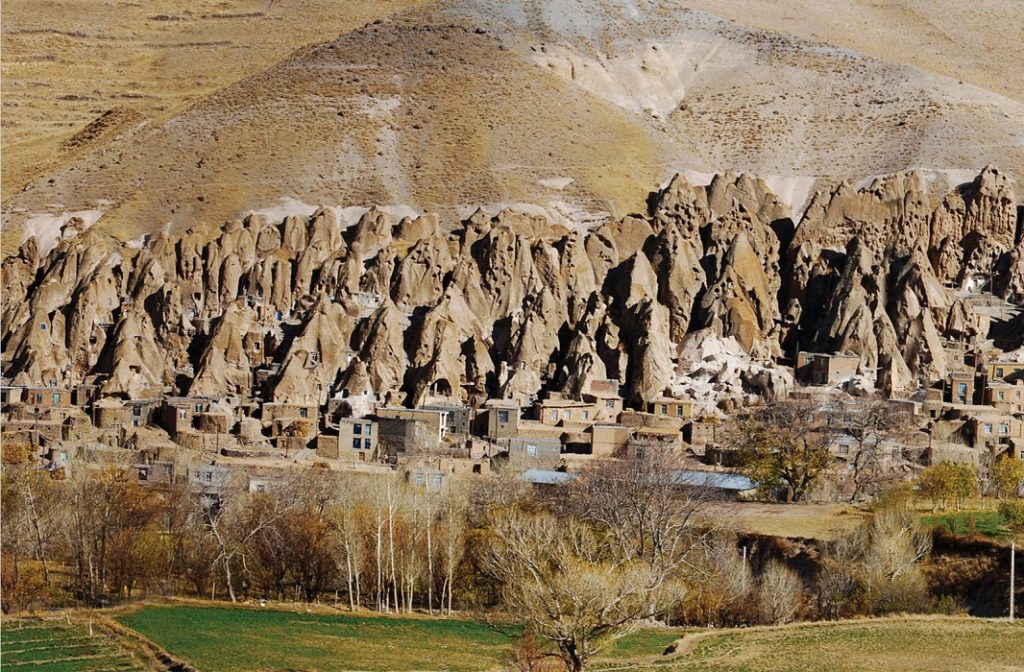
Carved in the volcanic rocks and tuffs of the region to primitive housesIt is called “Karaan” by the local people and is reminiscent of similar structures in the Cappadocia region. The Karaans were carved into the Lahars (volcanic mudflow or tuff flow) of Mount Sahand. The cone shape of the houses is a result of the lahar flow, which consists of porous rounded and angular pumice along with other volcanic particles embedded in a gray acidic matrix. These features make Kandovan a visual feast, like a huge termite colony.
This housing method is a reflection of a natural protective instinct observed in human settlements throughout history. Following the eruption of Sahand, these materials naturally moved and formed the characteristic rocks of Kandovan.

If you want to see the houses in Kandovan village during a tour in Iran, you may have a little difficulty at first glance. Because the stone used on the exterior of the houses imitates the color of the original cave, hiding the expanded dwellings. However, as you get closer to the village, you can notice windows, electrical cables, doors and chimneys emerging from the rock surface. Many homes have been modernized with power and some even running water to meet the needs of modern living, demonstrating the community’s harmony with the natural environment. Volcanic stone stands out because it is both easily malleable and strong enough to support these ancient structures.
What is particularly surprising about these houses is that they have supported life for centuries; They are known as old cave houses. Although the first inhabitants came from ancient tribes, the houses were updated over time and many were passed down from father to son.

We mentioned that the houses are known as “karan” in the local dialect. According to one interpretation, the word “Kandovan” is the plural form of “kando” meaning beehive. Another interpretation says that “Kandovan” means the unknown Land of Carvers. It is worth noting that the use of “Van” is found in the Avesta to express its plural meaning; for example, “ashavan”.
Although today the inhabitants of the village speak a Turkish dialect, some with traditional Iranian family names, such as Kayani, can be found. The mountains and rivers in the region have both Persian and Turkish, some even Assyrian, names.

Cave Houses in Kandovan Village
Communities in Kandovan have taken special measures to preserve the original cave as much as possible, ensuring that both the exterior and interior maintain the authentic Kandovan atmosphere. Some houses are based on natural cave formations, while others are carved into larger rooms and whitewashed to create a modern look and feel.
Most cave houses are generally two to four stories high. In a typical four-story house, the ground or first floor is usually used as animal shelter, while the next two floors are arranged as living space and the top floor serves as storage. There are reports of tunnels connecting individuals or families who own houses.

Similar Formations Exist in Only 3 Main Places Around the World
Kandovan, in terms of its geographical features Cappadocia It bears a striking resemblance to . The structure, which forms in a large area in Cappadocia, covers a smaller area in Kandovan. There are three main places around the world where you can see these types of formations: Cappadocia, Kandovan and in the US state of Utah Grand Staircase. However, a distinct feature that distinguishes Kandovan and Cappadocia from the Grand Staircase is the continuation of life within these unique structures in Kandovan and Cappadocia.
In Kandovan, just like in Cappadocia, the structures built in caves and on mountain slopes constitute the living spaces of the local people. This special village stands out not only with its geographical similarities, but also with the living culture it contains. Among these similar formations, Kandovan, Cappadocia and the Grand Staircase in the American state of Utah offer a unique and unique experience to visitors from different corners of the world.

Mount Sahand and the Emergence of the Village
Mount Sahand is one of the most important mountains of Iran and existed quietly in this region until the appearance of the Kandovan stone, about 140 thousand years ago. This unique stone, which emerged as the Kandovan Lake basin receded, played an important role in the formation of the enormous cave houses of Kandovan Village. There are various rumors about the emergence of the village:
- The original inhabitants of the area formerly known as Condon were nomadic. This place was equipped with temporary houses carved into the rocks for use during the summer months, and nomads used these houses temporarily to reduce the trouble of moving and then settled here.

- The first inhabitants of Kandovan village came from the village of “Hilevar”, an old ruin. Once upon a time, the Mongols attacked this village when it was about two kilometers away, and after this attack, they settled in Kandovan and lived here.
- In ancient times, the strategic location of the region attracted warriors due to its topographic advantages, especially penetrating from above, and these warriors began to dig houses and establish their own shelter here, which made the region difficult to defend. Within this difficult geography, Kandovan Village hosts a deep story not only with its natural beauties but also with its historical and cultural background.

Sahand Mountain is one of the beauties of the region and today it is full of natural beauty under the shadow of a legendary past. Some believe that the beauties of the legendary past are preserved in the biblical story of the Garden of Eden. “Baghs”, known as ancient Persian gardens, were famous for their magnificent beauty.