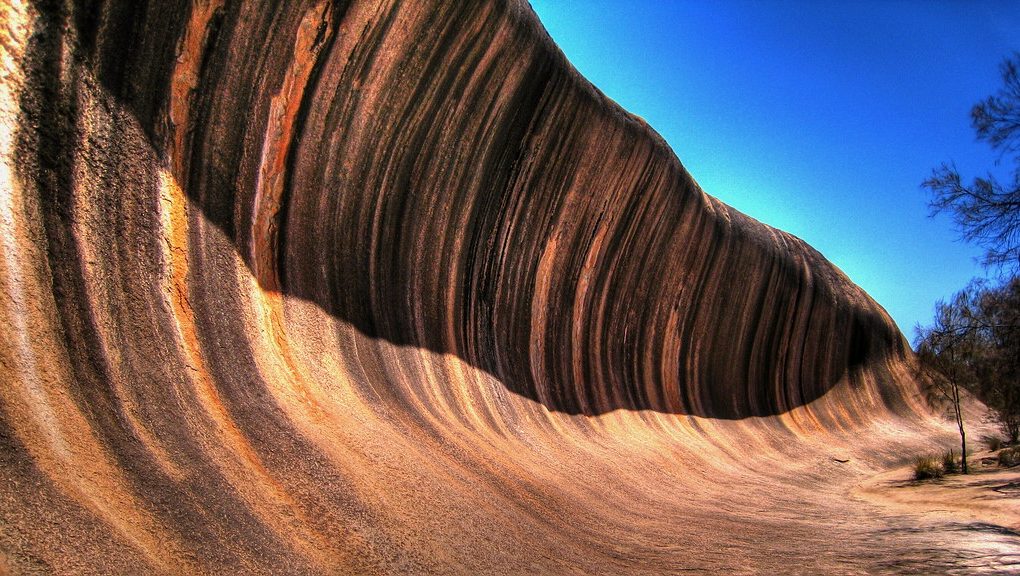
Wave Rock in Australia; It is a magnificent formation that looks like a sea wave, completely frozen in time. Curving like waves, these rock formation-like structures are common in western Australia. Thousands of tourists visit the region every year to see Wave Rock, the largest of the formations. This surreal-looking rock is considered sacred by the locals.
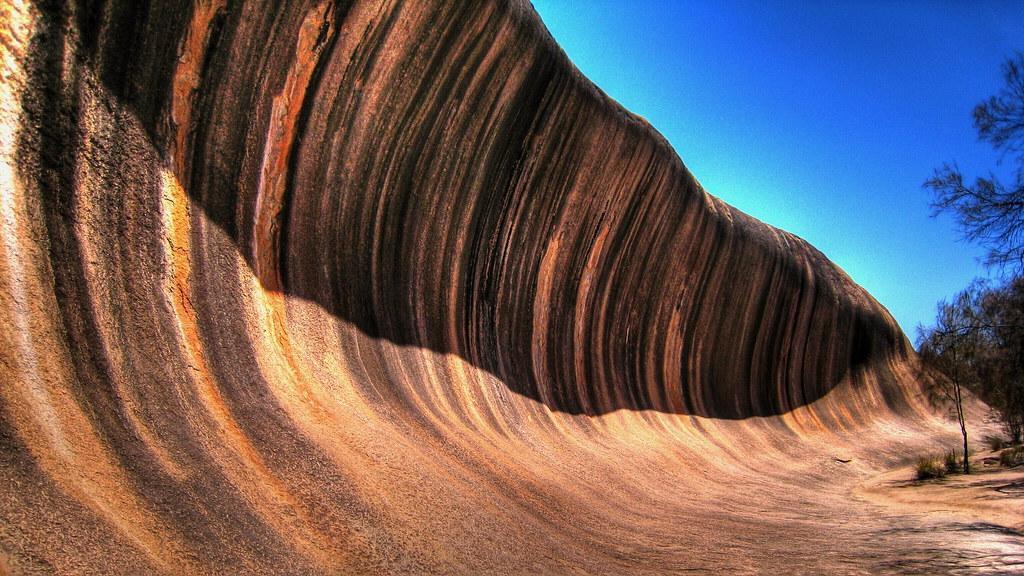
Wave Rock is located 3 kilometers east of the town of Hyden in the Golden Outback region of Australia. The rock in the deserted area has a length of 110 meters and a height of 15 meters. Resembling a wave about to break, the granite rock is thought to have formed about 2.5 billion years ago. This rock, which is part of a mountain, gained fame after the 1960s. The 160-hectare site where Wave Rock is located is the Hyden Wildlife Park nature preserve.
Sacrament of Wave Rock
Wave Rock has cultural significance for the Ballardong people living in the area. Indigenous people living in the area Aborigines if; believes that the rock was created by the rainbow snake. After consuming all the water in the soil, the rainbow snake swelled and dragged its body over the soil, causing this formation.
rainbow snake; He is often viewed as a creator god by Australian locals. He is a common deity known by many Aboriginal peoples by numerous names in different Aboriginal languages. It is a common motif in the art and religion of the Aboriginal people.
Wave Rock has been a sacred place for the local people for thousands of years, and today it is a frequent destination for rock music lovers. In the second half of September, a big rock festival with world-famous bands is held in the region.
The Formation of Wave Rock
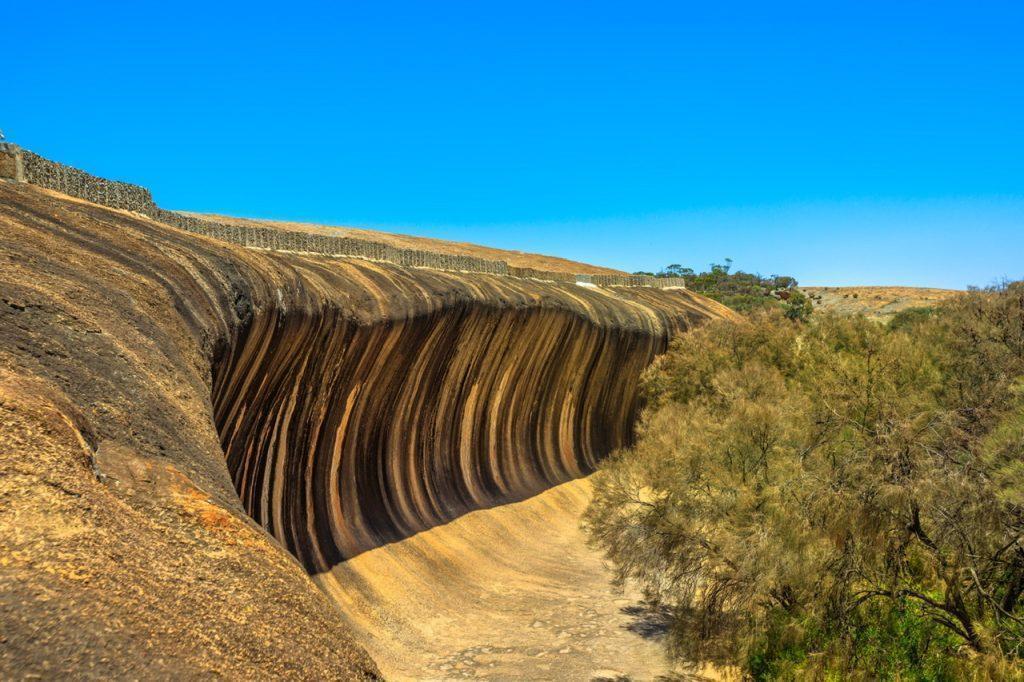
Wave Rock began to form 100 million years ago during the Cretaceous Period, when Australia broke away from Antarctica. Rock; It consists of coarse-grained granite and igneous rocks in which different minerals and crystals are embedded. Its strange shape, which reveals its surreal appearance, was formed as a result of wind and rain erosion. As the wind and rain hit the mountainside, the soft rocks at the base were carved and wave-like shapes emerged.
Vertical stripes that seem to be hand painted; It was formed as a result of different mineral deposits reacting with the water flowing from the slope and revealing different colors. Red, brown and yellow stripes have colored the mountain slope. At the same time, the algae and small organisms found on the slope of the mountain have an effect on the emergence of these colors.

This incredible formation is actually just one side of an entire hill known as Hyden Rock. Hyden Rock is part of the Yilgarn Craton landmass that formed between 2.8 and 2.5 billion years ago and forms all of Western Australia. David Newsome of Murdoch University states that both the absence of volcanoes and the tectonic formation of mountains cause the shape of Wave Rock. Newsome hypothesizes that more wave rock is forming below the surface. Smaller occurrences of this type are common in Central and Western Australia.
Wave Rock isn’t the only big wave rock in the world. In Arizona, similar geological formations lie within the Navajo sandstone canyon. These formations are mostly wind-shaped structures. The formations in both Australia and Arizona attract photographers because of the ever-changing colors of the surface as the light progresses throughout the day.