
The ancient astronaut (or ancient alien) theory refers to a variety of pseudo-scientific beliefs that suggest that intelligent extraterrestrial beings visited Earth and interacted with humans in prehistoric and ancient times. Throughout history, many cultures have had a deep interest in celestial events and deities. However, some theorists go beyond this interest and suggest that ancient civilizations made contact with extraterrestrial beings.
The ancient astronaut theory investigates these claims by finding out that prehistoric societies high-tech aliens He claims that these visits influenced cultural, technological and artistic developments.

Erich von DanikenThis hypothesis, which was initiated in the 1960s, presents various arguments that ancient structures, works of art and historical texts bear traces of extraterrestrial influences. Pyramids, megalithic structures, ancient artistic depictions And religious ritualsis among the cornerstones of this theory.
However, these claims have often been controversial and critically evaluated by the mainstream scientific and archaeological communities. A common view is that the gods of many religions were actually extraterrestrial beings, and that the advanced technologies brought by these beings were interpreted by early humans as divine power.

Academics’ View of the Existence of Ancient Astronauts
Ancient astronauts The idea that they exist and have visited Earth is not taken seriously by academics and archaeologists. These claims are often described as pseudo-archaeological or unscientific and are not supported by academic studies.
Evidence presented by proponents of the theory is often misinterpreted or considered fabricated. Furthermore, the historical development of these beliefs suggests that their proponents have adopted ideas that belittle the technological and cultural achievements of indigenous cultures on their own.

Proponents of Ancient Astronaut Theories
Prominent figures who advocated this theory in the second half of the 20th century include Robert Charroux, Jacques Bergier, Jean Sendy, Erich von Däniken, Alexander Kazantsev, Zecharia Sitchin, Robert K. G. Temple, Giorgio A. Tsoukalos, David Hatcher Childress, Peter Kolosimo, and Mauro Biglino. These individuals have written books or appeared frequently in the mass media promoting such beliefs.
Ancient astronaut theoriesis expressed in various terms, which hold that intelligent extraterrestrial beings have visited Earth in the past and that the effects of these visits are seen in present-day culture, technology, and religions. These terms include ancient aliens, ancient ufonauts, ancient space pilots, paleo-contact, astronaut gods And SETI based on the Bible There are expressions such as.
Those who believe in these theories, descendants of humans or extraterrestrials or they claim to be their creations. It is also suggested that ancient astronauts played a decisive role in the knowledge, religion and culture of humanity, and even that they acted as a “mother culture.”

Advocates say extraterrestrials Egyptian pyramids and on Easter Island Moai stone statues They argue that they played a direct role in the construction of structures such as the Sun or the Moon, or that they assisted humans in constructing them. According to this view, evidence for ancient astronauts derives from ambiguities in the historical and archaeological record and from archaeological artifacts that are viewed as anachronistic. These artifacts are reinterpreted by proponents as evidence of extraterrestrial technologies or contact.
The ancient astronaut theory has become popular on media platforms such as the History Channel, where it is presented in conjunction with alternative history theories. Those who support the theory present themselves as “rebels” or “independents” while claiming to be a minority excluded by academic circles.
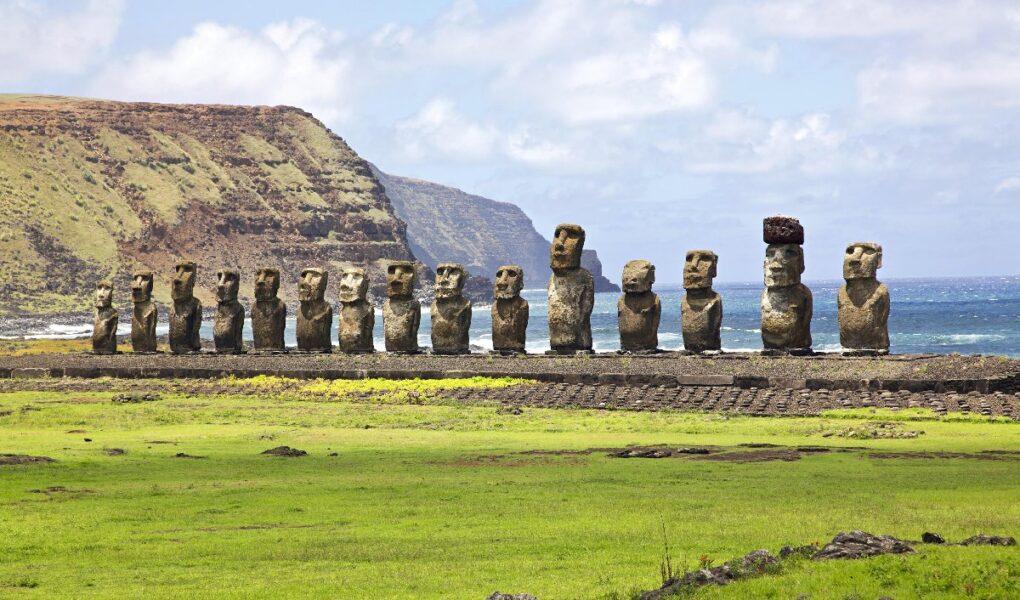
These theories focus particularly on monumental archaeological structures, and claim that these structures could only have been built by extraterrestrial intervention. This claim means that the indigenous peoples in the regions where the structures are located could not have built such structures on their own. One of the leading proponents of this idea is Erich von Däniken ”Chariots of the Gods” It is clearly seen in his work.
These claims were not taken seriously by mainstream archaeologists for a long time. However, the few popular science writers and skeptics who did comment on the subject universally criticized these theories. For example, Carl Sagan criticized ancient astronaut theories, stating that such claims often had plausible alternative explanations or were simply misreported, hoaxes, or distortions.

Researchers Defending Ancient Alien Beliefs
Ancient alien beliefs first appeared in science fiction literature in the late 19th and early 20th centuries, and were subsequently elaborated by various authors and researchers. The period when these theories received the most attention was The space race era of the 1960s This was because space exploration and technological advances during this period encouraged humanity to question whether it was alone in the universe.
Among the leading proponents of these hypotheses are Erich of Daniken is considered the most well-known name in ancient astronaut theory. Additionally, Zecharia Sitchin is known for his work investigating the influence of aliens in Sumerian and Mesopotamian mythology, while Giorgio A. Tsoukalos is another important figure who has attracted media attention and popularized this topic on television programs.
Other researchers, such as David Childress and Richard C. Hoagland, are also advocates of this field, with publications and statements supporting ancient alien theories. These individuals have strengthened the influence of ancient alien beliefs in modern popular culture by claiming to have traces of extraterrestrial visitation through ancient texts, artifacts, and works of art.
Carl Sagan and Joseph Shklovsky

Carl Sagan, together with Soviet astrophysicist Joseph Shklovsky, published in 1966 “Intelligent Life in the Universe” Sagan co-authored a book called “Broca’s Brain” that took a cautious approach to the idea of extraterrestrial contact. In his 1979 book “Broca’s Brain,” Sagan noted that his own speculations had been distorted by writers such as von Däniken.
According to Sagan, ancient astronaut hypotheses are issues that can be more easily resolved by traditional scientific explanations, and he emphasized that extraterrestrial visits to Earth are possible but unproven.
Erich von Daniken

Erich von DanikenHe became one of the most prominent proponents of the ancient astronaut hypothesis in the late 1960s and early 1970s. Published in 1968, “Chariots of the Gods” His book attracted great attention and he suggested that the ancient artifacts could have been made by extraterrestrial beings. Stonehenge, Pumapunku, the Moai statues And The Great Pyramid at Giza Structures like these, according to von Däniken, required a technological prowess that ancient peoples could not have possessed.
Von Däniken argued that ancient art and iconography represented air and spacecraft, non-intelligent but advanced beings, and ancient astronauts. Palenque’s Classical period Sarcophagus lid of Mayan ruler Pacal the GreatHe interpreted it as a depiction of a seated astronaut.

Von Däniken’s theories have been widely criticized. Critics have argued that von Däniken misinterpreted the data and that many of his claims are unfounded. Christian creationist communities in particular have been particularly harsh in their criticism of von Däniken’s work. Young Earth creationist author Clifford A. Wilson has attempted to refute von Däniken’s claims. “Crash Go the Chariots” He published a book called.
One of von Däniken’s most controversial claims concerns the Nazca Lines. Nazca LinesHe suggested that the lines were giant markings made to be visible from space. However, these lines are considered to be man-made artifacts by archaeologists and with extraterrestrial beings there is no evidence that they are connected.
Zechariah Sitchin

Zechariah Sitchinis one of the leading proponents of ancient alien beliefs. “The 12th Planet” He is known for his book, which is based on his unique interpretations of Sumerian and Middle Eastern texts and megalithic sites. Sitchin believes that the ancient Mesopotamian gods were sent to a distant planet orbiting the Solar System with a 3,600-year orbit. “Nibiru”He claims that they came from.
The inhabitants of this planet AnunnakiHe claims that the ‘humans’ came to Earth to collect raw materials such as gold, and in the process created humans through genetic engineering. Sitchin’s theories are not supported by modern astronomy and history, and have been refuted by many scholars. In particular, his translations of Sumerian and Mesopotamian cuneiform have been cited as inaccurate.
Robert K.G. Temple

Robert KG Temple, 1976, “The Sirius Mystery (Sirius In his book “The Mystery of the Dogon peopleTemple claims that the Dogon had advanced astronomical knowledge, comparable to that of ancient Egypt and Sumer.
Temple’s work is based on the findings of cultural anthropologists Marcel Griaule and Germaine Dieterlen. However, Temple’s claims have been questioned by critics who suggest that the Dogons’ astronomical knowledge may have been acquired from more recent, possible European sources.

Scientiststhere is a common consensus on the validity of the ancient astronaut hypothesis. This hypothesis may not be fundamentally impossible, but it is generally considered unnecessary and unfair by the scientific community. The “mysteries” its proponents claim can be solved by simpler explanations that do not require ancient astronauts.
Therefore, instead of investigating the supposed mysteries, it is more logical to question the feasibility of this hypothesis. The scientific consensus recommends avoiding unnecessary and excessive speculations by applying the principle of Occam’s razor, and therefore states that the ancient astronaut hypothesis should be rejected.
On the subject ”Evidence That Aliens Have Visited Earth” For the article named CLICK!
To join our WhatsApp group CLICK!


